Pride Marketing Divide: How DTC Brands Showed Up While Big Retail Went Quiet
In June 2025, a funny thing happened: some of the world’s loudest brands went quiet.
According to Modern Retail, nearly 40% of Fortune 500 and Global 100 companies scaled back Pride campaigns this year—and not one planned to increase them. The reason? Political pressure. A full 61% of executives cited the current U.S. administration as influencing their decision to dial it down.
Let’s call it what it is: fear.
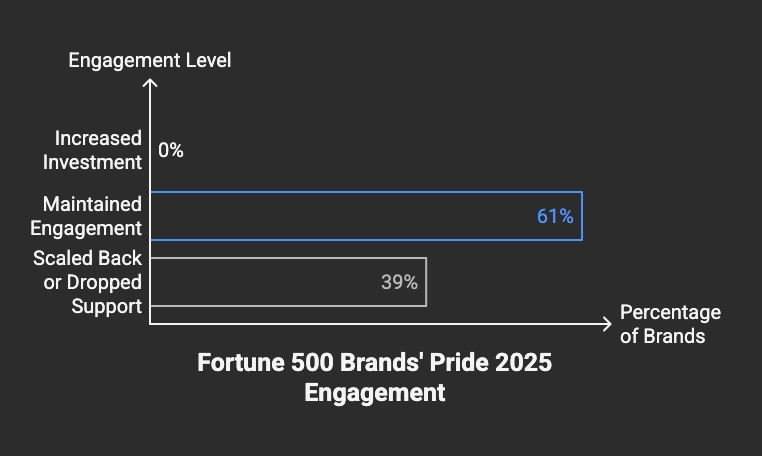
Brands like Target, once known for vibrant, front-and-center Pride displays, shrunk their collections and softened the messaging. This year’s collection? Beige sweatshirts and micro-tagged rainbow tees. LGBTQ agency founder Matt Tumminello spotted placeholder copy on product labels in-store. His takeaway? “This was the year brands blinked.”
Some even went further. According to CBS News, corporate sponsors pulled out of Pride events across the U.S., leaving organizers scrambling to close 20–30% funding gaps. Meanwhile, brands like Target were already feeling the fallout: foot traffic dropped 4–8% year-over-year after they softened their DEI stance (Retail Brew).
Wildfang Didn’t Blink—And That Made All the Difference
While big-box brands scrambled to avoid controversy, DTC brands built for community stepped up.
Wildfang—a gender-free fashion brand built on Shopify—launched one of the most talked-about Pride campaigns of the year. It wasn’t performative. It was personal.
The campaign featured Vivian Wilson, a 21-year-old trans woman (and Elon Musk’s daughter), as its lead model. The brand dropped a T-shirt that read: “Existing Shouldn’t Be Revolutionary,” and donated 100% of proceeds from that shirt, plus 10% of all June sales, to The Trevor Project.
It didn’t just go viral—it paid off. Wildfang pulled in 80,000+ likes, earned national media coverage, and, according to CEO Emma McIlroy, the Pride push helped them turn a profit for the first time (Modern Retail).
“We felt like there just needed to be a little joy this year… a reminder that we’ve got each other.”
— Emma McIlroy, CEO, Wildfang
Levi’s also deserves credit. They leaned into Pride with their “Meet Me in the Park” campaign—co-created with LGBTQ+ designers and tied to a real story of queer friendship. It wasn’t a one-month thing. Levi’s has backed the Equality Act since 2015, and recently fended off a shareholder challenge to weaken their DEI policies. They didn’t ghost the community after June—and that’s the bar.
Do Customers Actually Care? Yes—And They Have Receipts
Some execs fear that taking a stand will alienate customers. But the numbers tell a different story.
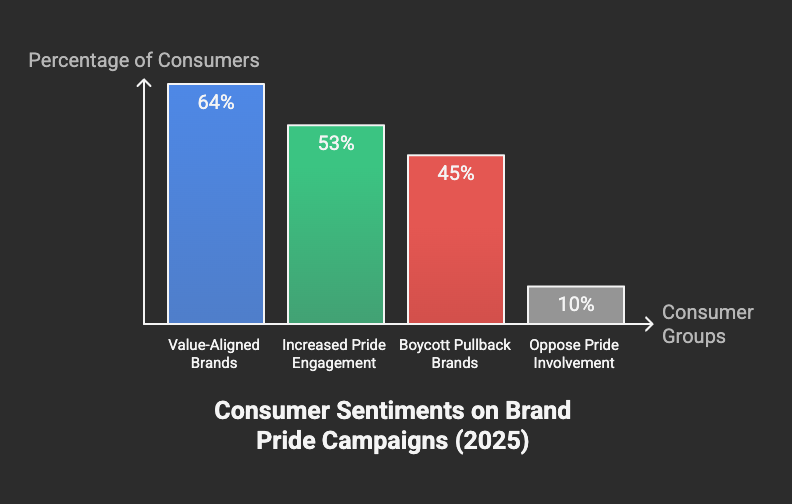
According to Morning Consult, 64% of U.S. adults prefer buying from brands aligned with their social values. That jumps dramatically among LGBTQ+ consumers:
- 53% say brand Pride engagement matters more now than two years ago
- 45% would stop buying from a brand that pulled back support (MediaPost)
Only 10% of Americans say brands shouldn’t engage with Pride at all. So the “backlash” narrative may be louder than it is real.
Wildfang saw a measurable lift in June sales, which is rare in early-summer apparel. Customers didn’t just like the campaign—they showed up at checkout. Levi’s got similar praise in LGBTQ+ press and social media. And M·A·C (operating DTC within Estée Lauder) co-sponsored 20+ local Pride events and launched a limited-edition product with Kim Petras, donating all proceeds plus an extra $1M to LGBTQ+ causes.
This is what it looks like when you show up for a community consistently—not just during campaign season.
Tactical Lessons for Shopify Brands
If you’re building a DTC brand in 2025, this wasn’t just a social moment. It was a blueprint. Here's what to take away:
- Consistency > Campaign
Showing up in June is table stakes. The brands earning long-term trust are doing the work in April, October, and all year round. - Action > Aesthetic
A rainbow logo doesn’t cut it. Consumers are looking for receipts—donations, policies, collaborations that actually support people. - Courage > Caution
Avoiding controversy doesn’t build brand equity. Taking a stand might ruffle feathers, but it also builds community, trust, and LTV.
If your brand was built on community, don’t disappear when it matters most. Pride 2025 showed us exactly which brands meant it—and which ones were just renting the moment.
Subscribe for weekly DTC insights.