2026 Shipping Costs Soar: Carriers’ 5.9% Rate Hikes Squeeze DTC Margins
The 5.9% Rate Hike Is Just the Tip of the Iceberg
If you're running a DTC brand, brace yourself: the 5.9% shipping rate increase is just a starting point. Expect a 10–15% rise once hidden fees and surcharges are factored in (PR Newswire, Ecommerce Fastlane). FedEx, UPS, DHL, and USPS have announced "average" increases in the 5–6% range, but once you consider new dimensional weight rules and compounding surcharges, the costs stack up (Supply Chain Dive).


Three years at 5.9% translates to an 18%+ cumulative increase since 2024, even as inflation cools elsewhere (Supply Chain Dive). Shipping isn't just a line item anymore—it's a margin killer.
 Max Garland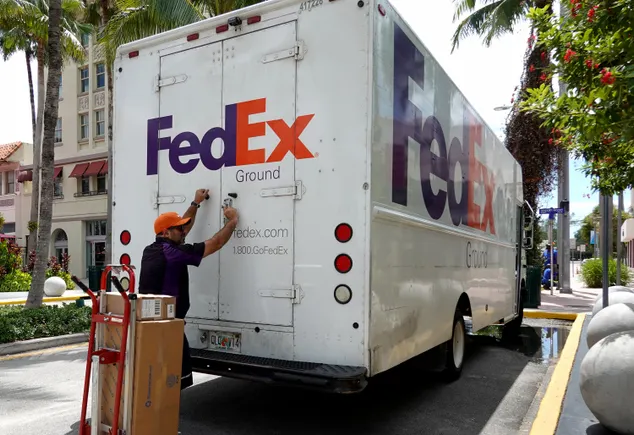
Shipping: Now a Top Threat, Not a Footnote
Shipping used to be a background expense. Not anymore. In 2026, fulfillment costs now consume 15–25% of total operating costs for many DTC brands (Agile Brand Guide). That's as much as, if not more than, what you spend on marketing.
 Agile Brand Guide
The big carriers cite higher fuel, labor, and infrastructure costs. Sure, but if you're running a lean DTC shop, you're absorbing these price increases with far less leverage than big-box players (Agile Brand Guide).
Here's what 2026 looks like:
- FedEx: 5.9% GRI for U.S. package services—the third straight year (Supply Chain Dive).
 Max Garland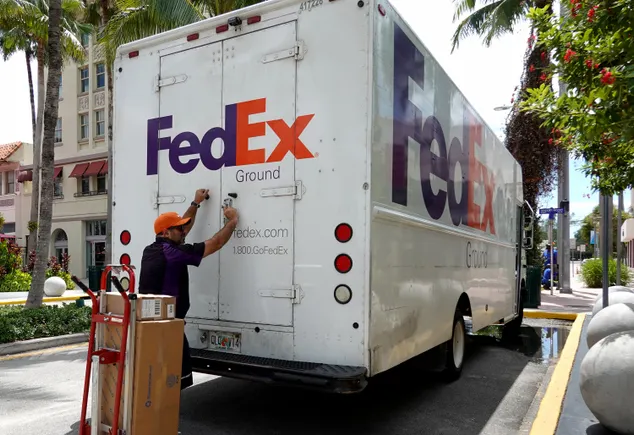
- UPS: 5.9% GRI effective December 22, 2025, affecting Ground, Air, and international (Shipware).
 Shaan Yusuf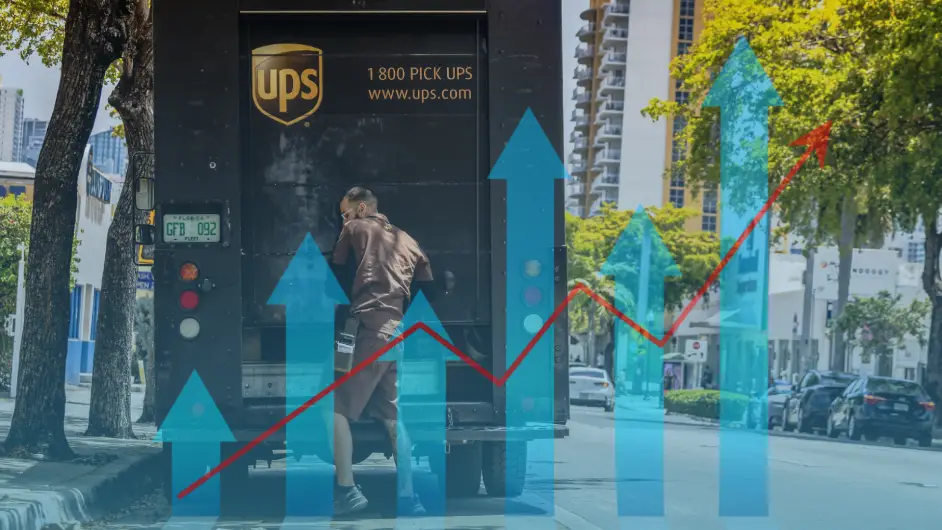
- DHL Express: 5.9% global increase
- USPS: Priority Mail up 6.6%, Ground Advantage up 7.8% in 2026 (Ecommerce Fastlane).
 Jane Peh
These are the "headline" increases. The real pain is in the details.
The Real Cost: Surcharges, Dim Weight, and Hidden Fees
Forget the base rate—the real game is in surcharges. In 2026, actual shipping costs for many brands are up 8–14%, not 5.9% (Topway Shipping). Here's where carriers make their money:
 admin
admin
- Fuel surcharges: Still pegged to volatile fuel indices.
- Delivery area surcharges: FedEx’s residential fee now $6.95 per package (Supply Chain Dive).
- Dimensional weight: Charged by volume, not just weight. Ship air in a big box? You pay for phantom pounds (Supply Chain Dive).
- Oversize/additional handling: Packages over certain sizes incur $15–30 fees or $275+ for true oversize (PR Newswire).
- Address correction: $10–15 per typo. Shipping without address validation? You’re lighting money on fire (PR Newswire).
- Inbound fees: Even receiving goods isn’t safe—FedEx’s inbound processing ticks up yearly (Supply Chain Dive).
Add it all up: 30–40% of your "shipping" spend is now in hidden surcharges (GoBolt). That "5.9%" rate increase is almost always an understatement.
Pull Quote: “Shipping has ceased to be a simple operational expense. It has evolved into a core component of cost of goods sold.”
—Ship.com advisory, Feb 2026 (PR Newswire)


The average DTC brand is paying $8–$15 just to ship each order in 2026 (GoBolt), and a huge chunk of that isn’t obvious from the label rate.
 Amanda Conway
Example: The 5.9% Hike in Real Life
Ship a $10 package last year. Add a 5.9% hike: $10.59. Now add $0.40 higher fuel surcharge, $0.40 higher area fee, and another $1 from dimensional weight rounding. Suddenly, you’re at $12+. That’s a 20% jump. Multiply that by thousands of orders, and it’s clear: this isn’t just inflation—this is a business model threat.
Brands shipping lightweight, bulky, or residential parcels? You’re getting hit hardest (Shipware), especially if you’re still shipping from a single warehouse.
“Free Shipping” Is Now Eating Your Margin—And Maybe Your Business
DTC has spent a decade training customers to expect free or flat-rate shipping. But with relentless carrier hikes, eating these costs is unsustainable. Over 80% of U.S. consumers still expect free shipping under certain conditions (Red Stag Fulfillment). If you’re not passing costs through, you’re just subsidizing your carrier.
 Your Company Name
“If you don’t treat shipping like COGS, you aren’t running a business; you’re subsidizing a carrier.”
—Kyle Henzel, Ship.com (PR Newswire)
So what are sharp operators actually doing?
- Raising AOV and/or product prices: Quietly bumping prices or nudging bundles to absorb shipping costs.
- Increasing free-shipping minimums: Only 12% of brands now offer free shipping with no minimum (Stord). Most are pushing thresholds to $75–$100+.
 Studio Freight
- Charging for shipping on lower-value orders: Some are introducing modest shipping fees for orders under a minimum, with clear messaging.
- Cutting costs elsewhere: If you won’t budge on free shipping, you’re probably trimming ad spend, optimizing packaging, or squeezing fulfillment.
Returns are no longer immune either. The days of “free returns” on everything are ending fast—especially for apparel and low-ticket items. Two-way shipping on a $50 order? That’s a margin bloodbath.
Fighting Back: Operator Playbook for Smarter Shipping in 2026
This isn’t the part where we tell you to eat the cost and hope for the best. Here’s what founders and e-commerce ops teams are actually doing to protect margins—without wrecking CX.
1. Packaging Optimization: No More Shipping Air
Audit your last quarter of shipments. Are you sending 3 lb of product in a 7 lb “dim weight” box? Right-sizing packaging is the fastest way to cut costs. Brands have seen 10–12% reductions simply by eliminating dead space (Ecommerce Fastlane). Poly mailers for soft goods, custom inserts, and tighter boxes are all on the table. Don’t let your 3PL default to oversized cartons.
2. Real-Time Rate Shopping and Regional Carriers
If you’re still 100% loyal to a single national carrier, you’re leaving money on the table. Use shipping software or a nimble 3PL to compare rates and services for every order. USPS can win for lightweight, regional packages—even after its own rate hikes (Ecommerce Fastlane). Regional carriers are increasingly competitive, especially for high-density corridors.
3. Address Validation: Stop Paying for Typos
Every time a customer mistypes their address, you’re risking a $10–15 fee (PR Newswire). Implement address validation at checkout. There’s an app for that—no excuses.
As USPS starts requiring more granular package dimension data, ensure your product info is complete. Non-compliance will get expensive (Supply Chain Dive).
4. Split Inventory, Ship Closer
Shipping everything from the coasts to the heartland? You’re eating high-zone surcharges. The savviest brands are splitting inventory across multiple warehouses or 3PLs to shorten the average shipping distance—dropping per-package rates and speeding up delivery.
5. Negotiate, Don’t Accept
If you’re shipping 500+ orders a month, you have leverage. Negotiate your carrier contracts or join aggregate shipping programs via your 3PL. Ask for rate caps or credits for new volume. Play the carriers against each other—they expect you not to.
6. Automate What You Can (But Don’t Lose the Human Touch)
Automation isn’t just a buzzword—it’s a margin protector. Use rules to auto-select the cheapest carrier, batch orders, and fill customs data. But don’t forget: human error is expensive, and so is robotic customer service.
This is where LiveRecover fits in as part of a smart operator’s toolkit. We use real human agents to text customers who abandoned carts, answer their objections, and recover sales in real time—outperforming automated flows. Sometimes, combining automation with a human touch is what actually moves the needle.


Delivery Experience: Transparency Is the New Speed
Let’s be real: you may have to slow down shipping to save costs. But if you keep customers in the loop, most don’t care. 53% of consumers say a bad delivery experience will make them spend less with a brand (WSI). But “bad” is usually surprise delays and radio silence—not an extra day or two if you set expectations.
- Automate tracking updates via SMS and email.
- Be clear at checkout: If it’s now “Standard (4-day) Shipping – Free,” say it upfront.
- Offer paid expedited shipping for those who want it—let them subsidize your costs.
Reliability and transparency win over raw speed for most shoppers (WSI). Automate the routine, but deploy humans for high-touch moments: a quick message when something goes sideways, a proactive solution for a lost package, or even a personal thank-you after delivery.
 Mary Berko
The Bottom Line for Operators
Shipping is no longer an afterthought—it’s the new COGS, and it’s eating your margin if you’re not ruthless about optimization (PR Newswire). Carriers are raising rates in lockstep (Topway Shipping). Those who ignore the creep will keep subsidizing UPS and FedEx until they’re out of business.
Audit your shipping. Trim every ounce of waste. Negotiate like you mean it. And, above all, communicate with your customers—because if you execute well, they’ll barely notice the changes.
Want more operator-tested tactics? Subscribe for weekly DTC insights.