Outway’s Turnaround: How a Socks Brand Jumpstarted Profitable Growth
Outway, the premium sock brand founded by former cyclist Rob Fraser, experienced the typical DTC roadblock: stagnant sales, shrinking margins, and intense market competition. After bootstrapping his Shopify-based business past $10M and securing a $3.2M investment in 2022 (PR Newswire), Fraser faced a critical challenge by 2023. Yet, instead of opting for quick fixes, he paused and recalibrated.
The result? Outway surged back to profitable, eight-figure revenue, proving the power of strategic channel expansion, operational rigor, and a rejuvenated brand identity (DTC Podcast, Amazon Music). Here’s the playbook that brought them back stronger than ever.
The Plateau: When Hypergrowth Hits a Ceiling
For Outway, like many early DTC frontrunners, rapid growth masked underlying issues. As acquisition costs soared and competitors crowded the market, Fraser faced an inflection point. Reflecting on this phase, Fraser advises, “Trust your gut over well-meaning ‘experts’” who almost derailed Outway (Direct-to-Consumer Newsletter).


Despite suggestions to diversify into new products, Fraser focused on the lucrative global sock market, worth around $40B (Direct-to-Consumer Newsletter). Still, focus alone wasn’t enough to combat stagnation. It was time to rewrite the strategy.
Channel Expansion: From DTC Purism to Omnichannel Offense
The first major shift? Outway diversified beyond DTC. In 2024, Fraser implemented a three-pronged channel strategy (DTC Podcast, Amazon Music):
1. Amazon as a Dual Engine.
Outway embraced Amazon, where 66% of consumers start their product searches (Jungle Scout). Fraser used Amazon not just for sales but to tap into existing demand without heavy ad spend (Direct-to-Consumer Newsletter).
2. Wholesale Reinvented.
Reintroducing wholesale allowed Outway to reach customers in specialty stores—a demographic not typically targeted through Facebook ads.
3. Streamlined Logistics.
By treating the U.S. as a standalone market with dedicated 3PL services, Outway cut shipping costs and delivery times, enhancing margins (DTC Podcast, Amazon Music).
The takeaway? Be where your customers are, whether on Amazon or in-store. Outway proved that an omnichannel approach can amplify, not dilute, a brand.
Margin Obsession: From Growth-at-All-Costs to Profitable Fundamentals
Channel expansion alone wouldn’t suffice. Outway needed to focus on margins. As Fraser learned, growth without profit is unsustainable. His team scrutinized costs, tariffs, and inefficiencies to bolster margins (DTC Podcast, Amazon Music).
By optimizing the product mix and shunning excessive discounts, Outway ensured every sale was profitable (Direct-to-Consumer Newsletter). Fraser emphasized the need for professional operations: “Tighten inventory, optimize ad spend, and seek efficiencies everywhere.” This approach returned Outway to cash flow positivity, leaving behind the unsustainable “growth at any cost” mindset.
The Brand Moat: Community as the Last Defensible Edge
With channels and margins in check, Outway centered its strategy on brand differentiation. Fraser believes,
“Brand is the last defensible moat in DTC” (DTC Podcast, Amazon Music).
The Outway Running Club became central, transforming buyers into participants (DTC Podcast, Amazon Music).
Their referral and influencer programs, yielding a 7x ROI, turned satisfied customers into brand advocates (getSaral). With over 40% of customers returning, Outway's community-driven model is a testament to its strong brand moat (Retention Road Podcast).
 Priya NainMay 15, 2024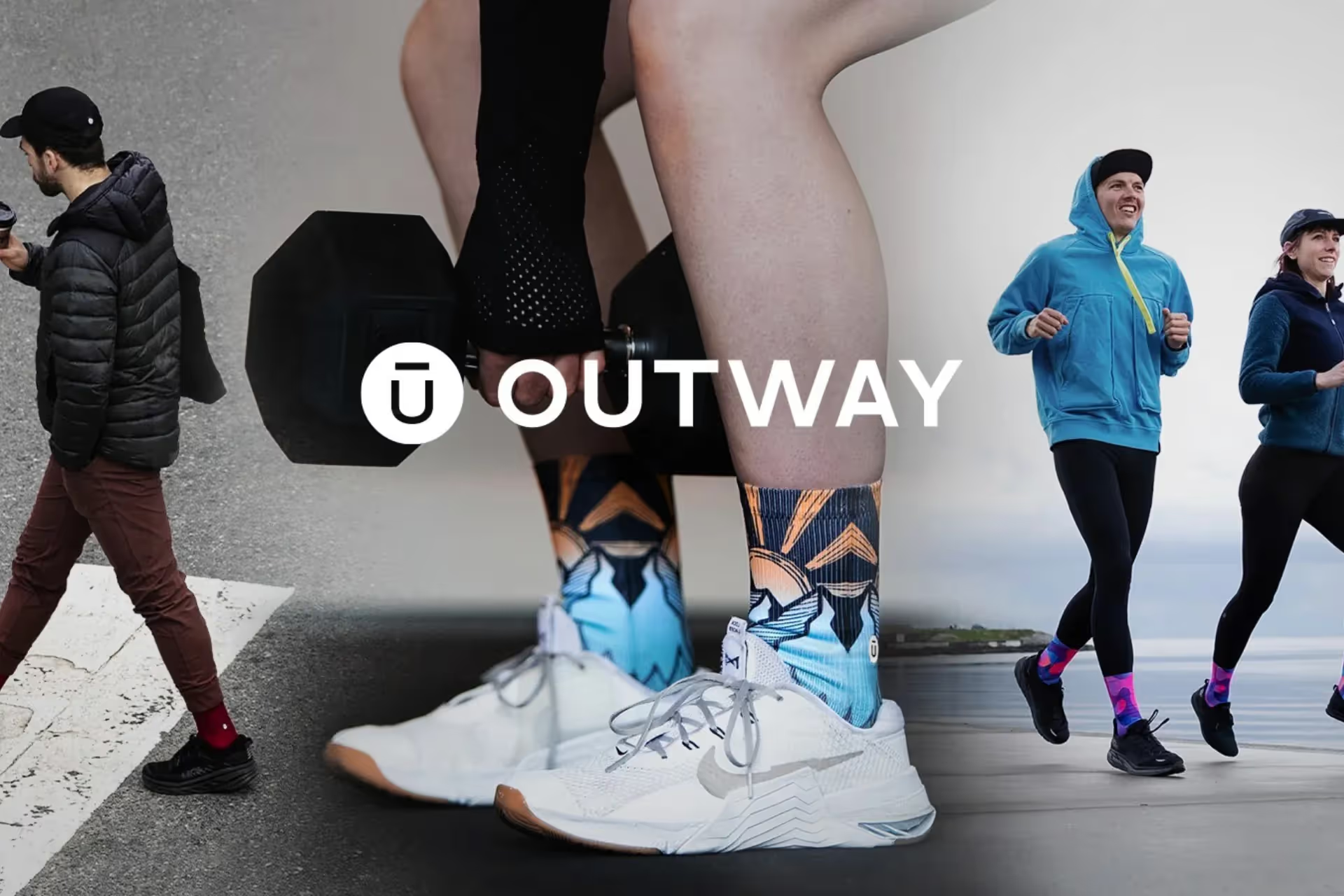
Outway’s Playbook: Lessons for Founders
By late 2025, Outway had achieved a triumphant comeback: eight-figure revenue, profitability, and a fortified brand (DTC Podcast, Apple). Here’s what DTC operators can learn:
1. Expand Channels With Purpose.
While Shopify remains the backbone, strategic use of Amazon and wholesale can drive growth and resilience (DTC Podcast, Apple).
2. Margin Discipline Isn’t Optional.
Prioritize profit. Identify and exploit margin opportunities—be it logistics, product mix, or pricing strategies (Direct-to-Consumer Newsletter).
3. Invest in Your Moat.
Your community and brand are irreplaceable assets. Enhance customer experience, content, and advocacy to build a durable brand (DTC Podcast, Amazon Music).
Fraser's journey with Outway underscores a fundamental truth in DTC: there are no shortcuts. Sustainable growth stems from solid business fundamentals—channel strategy, margin discipline, and deep customer connections. In today’s market, that’s the enduring path to success.
Subscribe for weekly DTC insights.