Back-to-School Shifts to Summer — How DTC Brands Win
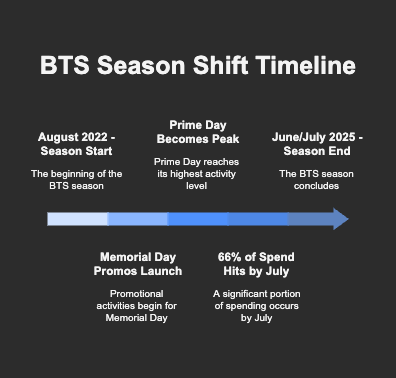
Back-to-school (BTS) no longer starts in August. In 2025, it kicked off right after Memorial Day, as major retailers raced to front-load promotions—and parents followed, wallets in hand (Retail Brew).
For DTC brands, this isn’t just a calendar shift—it’s a competitive test. The brands that plan earlier, message smarter, and build around Prime Day will win the new BTS window. Those that don’t? They’ll miss it entirely.
June Is the New August
This isn't a theory. It's in the data:
| Metric | 2024 | 2025 | Source |
|---|---|---|---|
| June BTS shoppers | 11% | 20% | Retail Dive |
| Families shopping by early July | — | 55% | NRF |
| BTS spend in June–July | 59% | 66% | Deloitte |
Behind the shift? Economic pressure. Parents are dealing with inflation, tariffs, and a sense that deals (and inventory) won’t last (Retail Dive).
Prime Day = The New Kickoff
85% of shoppers now tie their BTS purchases to Prime Day and July discount events
(NRF).
| Retailer | 2025 Strategy |
|---|---|
| Target & Walmart | Launched BTS promos a week earlier than 2024 (Reuters) |
| Hydros | Timed bundles to Prime Day, saw 42% revenue spike (Retail Brew) |
| Fast Fashion | Pushed flash sales to ride July search volume |
It’s not about copying Amazon. It’s about being present when the traffic hits—and capturing intent with zero delay.
4 DTC Plays for a Shifted Season
1. Launch Early
School-ready campaigns in June are outperforming August. One sneaker DTC brand saw +18% email engagement in June versus their typical August drop.
2. Ride the Prime Day Wave
Hydros’ revenue spike during Prime Day wasn’t luck—it was lead time. They accelerated POs, built bundles, and promoted hard while competitors were still planning.
3. Convert the Surge
Higher traffic = more abandoned carts. Brands using LiveRecover to layer in human-powered SMS are recovering ~20% of otherwise lost checkouts without defaulting to discounts.
4. Don’t Skip August
Latecomers still exist: nearly 50% of parents shop in August (NRF). A “Last Chance BTS” push in late July—especially if it rides a tax-free weekend—can still move volume.
Inventory: Land It or Lose It
Supply chain risk isn’t abstract—it’s visible in the numbers. In spring 2025, cargo volume from China to U.S. ports dropped 60% year over year (Bloomberg).
Hydros again had the edge: they rushed POs in Q1 and stockpiled key components ahead of a tariff freeze (Retail Brew).
Smart DTC operators are:
- Prioritizing June delivery dates—even at premium freight rates
- Narrowing SKUs to best-sellers
- Triple-checking vendor timelines
The difference between in-stock and out-of-luck is usually about four weeks of foresight.
Messaging That Matches the Moment
This year’s BTS buyer is stressed, price-sensitive, and deadline-driven.
TeacherLists reports that stockout fear is a top driver of early purchasing (TeacherLists, 2025). Meanwhile, inflation expectations are the highest they've been since the 1990s (Retail Dive).
What works:
- “Beat the rush”
- “Lock in prices now”
- “Don’t get left out”
It’s not scare tactics. It’s empathy—positioning your brand as the one that gets it and helps customers plan smarter.
The Bottom Line
Back-to-school is now a June-through-July sport. The DTC brands winning this cycle aren’t reacting faster—they’re planning earlier.
If you want share of wallet, you can’t wait until August. That’s not back-to-school anymore.
That’s leftover inventory season.
Subscribe for weekly DTC insights.